Is malaria still a concern in Vietnam?
This is a question many international travelers ask when planning a trip to Vietnam. This article by Chapi Tours provides clear, accurate, and up-to-date information about malaria in Vietnam—everything you need to know in one place.
The good news is that Vietnam is currently considered a very low-risk country for malaria, especially in major cities and popular tourist destinations. However, understanding what malaria is, where limited risks may exist, and how to prevent mosquito bites will help ensure a safe and enjoyable journey.
What is Malaria?
Malaria is an infectious disease caused by Plasmodium parasites and transmitted through the bite of an infected female Anopheles mosquito.
✔ Malaria does NOT spread through casual contact, food, water, or person-to-person interaction.
✔ Transmission only occurs through mosquito bites.
How is Malaria Transmitted?
Malaria transmission requires:
- An infected Anopheles mosquito
- Typically active from dusk to dawn
Risk is mainly associated with:
- Remote forested areas
- Mountainous regions with dense vegetation
- Prolonged outdoor exposure at night
- Sleeping in forest camps or deep jungle areas
👉 Malaria-carrying mosquitoes are different from those that spread dengue fever.
Common Symptoms of Malaria
Symptoms usually appear 7–30 days after exposure and may include:
- High fever and chills
- Sweating
- Headache
- Muscle and joint pain
- Fatigue or nausea
Severe cases are very rare among travelers, especially those following standard tourist routes.
⚠️ If you experience fever after visiting remote or forested areas, seek medical care and inform your doctor about your travel history.
Current Malaria Situation in Vietnam (Latest Overview)
Vietnam has made remarkable progress in malaria control and elimination:
- ✅ Malaria has been eliminated from most urban and tourist areas
- ✅ National case numbers have dropped dramatically over the past decade
- ✅ Remaining cases are:
- Localized
- Sporadic
- Mostly confined to remote forested regions
👉 For international travelers visiting Vietnam’s main destinations, the risk of malaria is extremely low.
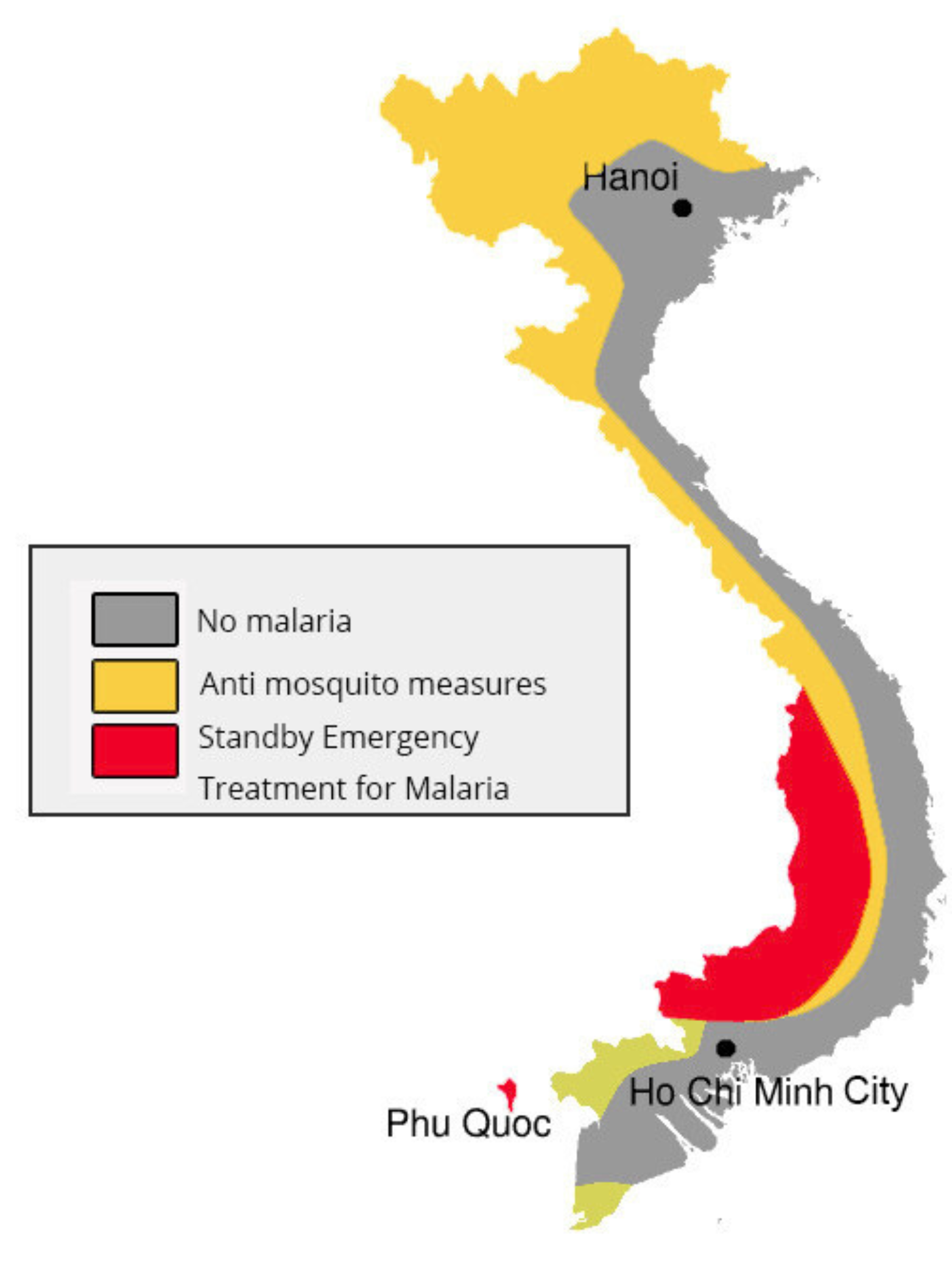
Malaria Risk by Popular Tourist Destinations
🟢 No Malaria Risk
No preventive medication required.
- Hanoi
- Ninh Binh
- Ha Long Bay
- Hue
- Da Nang
- Hoi An
- Nha Trang
- Da Lat
- Ho Chi Minh City
- Mekong Delta
- Phu Quoc Island
These areas are considered malaria-free for travelers.
🟡 Very Low Risk (Remote Areas Only)
- Ha Giang
- Cao Bang
- Mu Cang Chai
- Mai Chau
- Sa Pa
✔ Tourist routes, towns, hotels, and homestays are safe
✔ Risk applies mainly to deep forest or overnight jungle activities
🟠 Low & Localized Risk
- Phong Nha – Ke Bang National Park
Risk is limited to:
- Forest trekking
- Overnight cave expeditions
- Jungle camping
Standard tourist stays carry minimal to no risk.
When is Malaria Season in Vietnam?
Malaria transmission, where present, is seasonal:
🦟 Rainy Season: April – November
📈 Peak months: May–June and October–November
Even during these months, the risk for tourists remains very low.
Do Travelers Need Malaria Prevention Medication?
🔹 Generally NOT recommended for:
- City travel
- Organized tours
- Beach destinations
- Short-term visits
🔹 May be considered if:
- Traveling deep into forested areas
- Extended stays in remote regions
- Adventure or research activities off tourist routes
👉 Always consult a travel health professional for personalized advice.
Simple & Effective Prevention Tips
✔ Use mosquito repellent, especially in the evening
✔ Wear long sleeves and trousers in rural or forested areas
✔ Stay in air-conditioned or screened accommodations
✔ Choose reputable hotels and tour operators
✔ Inform your guide if you feel unwell
These basic measures are usually more than sufficient.
A Message from Chapi Tours
Vietnam is a safe and welcoming destination.
Malaria is not a major concern for international travelers today.
With basic precautions, you can explore Vietnam with confidence and peace of mind.
At Chapi Tours, your safety always comes first. We:
- Monitor health and travel updates closely
- Design itineraries with traveler well-being in mind
- Work with trusted local partners nationwide
📩 Need more travel health advice or a customized itinerary?
Our team is always happy to assist you.